
When you view a warehouse, check that its loading bay platform suits the vehicles you use, that the dock leveller bridges the gap without a steep slope, that the platform edges are clearly marked and guarded, and how the site stops a lorry moving during loading. Great Britain's Health and Safety Executive (HSE) says a platform slightly lower than the vehicle bed is better than one slightly higher.
In this piece8 sections
Why check the loading bays when you view a warehouse?
The loading bays decide how quickly and safely goods move in and out. HSE, Great Britain’s workplace safety regulator, says loading areas are often arranged into bays with a raised platform for vehicles to park against, and that it is important to have enough space around the bays for vehicles to move safely in and out. EdgeProp reported that XME Business Park 2 in Nilai offers 40ft container truck loading.
- The vehicle’s load bed: its height varies from vehicle to vehicle, and even between empty and loaded
- Dock leveller: an adjustable ramp that covers the height difference
- Dock bumper on the bay wall
- Wheel chock: the simplest way to stop a vehicle moving
- The platform edge: marked clearly
- People on the platform: anyone not loading or unloading is kept away
Does the platform height need to match the vehicles?
As closely as you can, but it will never match exactly. HSE notes that vehicle load platform heights vary quite a lot, even between when a single vehicle is empty or loaded, and that a bay platform slightly lower than the vehicle platform is better than one slightly higher. So when you view a warehouse, start with the vehicles you will actually use.
Bay slightly lower
- HSE
- The better of the two
Bay slightly higher
- HSE
- Less suitable than slightly lower
What should you check on a dock leveller?
A dock leveller is an adjustable ramp that covers the height difference between the vehicle and the bay platform. HSE says it should not be extended to a steep slope either downwards or upwards, that its folding lip must not trap anything as it unfolds or folds, and that the people using it should be competent to do so safely.
- The slopeTry it with the vehicles you use most: is the ramp steep once it bridges the gap?
- The lipWatch it unfold and fold: could it trap anything?
- The platform edgeHSE says the edges of loading bays need to be marked clearly.
- The guardrailsWhere people could fall from a platform, look for secure guardrails.
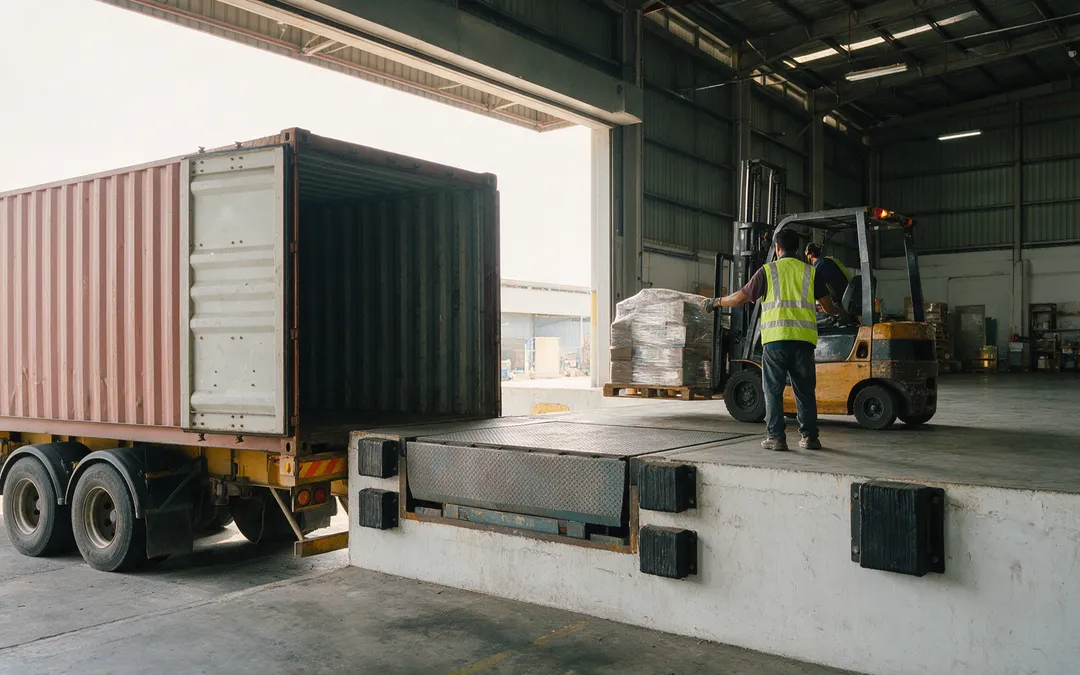 Photo for illustration purposes only
How do you stop a vehicle moving during loading?
HSE lists several site-based ways to stop a vehicle moving from the bay, each with a catch, and notes that systems that rely on people’s actions are less reliable than engineered solutions.
Wheel chocks
- For
- The simplest way; should be brightly coloured
- Against
- Whoever places or removes them is in a dangerous place
Vehicle restraints
- For
- Clamp to the vehicle, e.g. the rear under-run bar
- Against
- A heavy vehicle can rip them from their moorings
Traffic lights
- For
- Can be effective as a signal
- Against
- Do not actually stop a vehicle moving
Key control
- For
- Usually costs very little
- Against
- Many drivers carry extra keys
What should you check about the loading area’s layout?
HSE says wide loading areas will usually need at least two exit points, one at each end, and suggests a refuge where people can step clear of vehicles. Anyone not involved in loading or unloading should be kept away from the loading area.
- Two exits
- A refuge
- Room to manoeuvre
- Reversing visibility
- Earthing points
Dock sheltersHSE says dock shelters and dock houses can help control loading conditions, but they can create their own trapping hazards and can reduce communication between the driver and the site workers.
Looking for a warehouse with the right loading bays? Send Chris the size, the vehicles you use and the area.
WhatsApp ChrisWhat else should you check before you sign?
- The floor loadingSee floor loading and racking.
- The rest of the viewingSee what to check during a factory viewing.
- If renting, the tenancy termsSee renting a factory.
Have a warehouse with loading bays to rent out or sell? Tell Chris.
WhatsApp ChrisThis guide sets out published sources, not legal, safety or investment advice.
Sources (3)
- Health and Safety Executive (HSE), Loading areas: hse.gov.uk
- Health and Safety Executive (HSE), Site-based ways to stop vehicles from moving, 14 December 2021: hse.gov.uk
- EdgeProp, Sime Darby Property’s XME Business Park 2 meets continued industrial demand in Nilai Impian, 15 May 2026: edgeprop.my
Common questions
Should a loading bay platform be higher or lower than the lorry bed?
Great Britain's Health and Safety Executive (HSE) says a bay platform slightly lower than the vehicle platform is better than one slightly higher. Vehicle bed heights vary, even between when one vehicle is empty and loaded, so the platform will never match exactly.
What is a dock leveller?
An adjustable ramp that covers the height difference between the vehicle and the bay platform. HSE says it should not be extended to a steep slope down or up, its lip must not trap anything as it unfolds or folds, and the people using it should be competent to do so safely.
How do you stop a lorry moving during loading?
HSE lists wheel chocks, vehicle restraints, traffic lights and key control. Chocks are the simplest, but whoever places them is in a dangerous place, and traffic lights do not actually stop a vehicle moving. HSE says systems that rely on people's actions are less reliable than engineered solutions.
How many exits does a loading area need?
HSE says wide loading areas will usually need at least two exit points, one at each end, and suggests a refuge where people can step clear of vehicles.
Are dock shelters worth having?
HSE says dock shelters and dock houses can help control loading conditions, but they can create their own trapping hazards and reduce communication between the driver and the site workers.