
A ready-built factory is a completed building you buy or rent and fit out; building your own means buying an industrial plot and running the planning permission, building plans, construction and completion certificate yourself. Take a ready-built unit when your start date is fixed and your process is ordinary. Build when the process dictates the building - span, height, floor loading, power - and you can wait for it.
What is a ready-built factory, and what does building your own mean?
A ready-built factory is a completed factory or warehouse, new or second-hand, that you buy or rent and then fit out. Building your own means buying an industrial plot and running the design, the approvals, the contractor and the completion certificate yourself. Both routes end in a factory floor. What separates them is whether you trade time for control, or control for time. A third arrangement sits between the two: a developer or contractor builds to your specification, so you set the building without running the whole process yourself.
Ready-built
- What it is
- A completed factory or warehouse you buy or rent.
- Where it comes from
- A developer's unit in a managed park, or an owner's building on the subsale market.
- What you decide
- Which building to take, and what you change inside it.
- Who carries the build risk
- Whoever built it. You inspect a finished thing.
Build your own
- What it is
- An industrial plot, plus your own design, approvals and contractor.
- Where it comes from
- A plot in a park's later phase, or land on the open market.
- What you decide
- Span, height, loading, power, yard, layout - the building follows your process.
- Who carries the build risk
- You. Cost and date are only final when the building is.
Not sure which route is yours? Tell Chris your process, the size you need and your start date - he looks for finished units and for land at the same time.
Message Chris on WhatsAppWhat stands between you and production?
On the build route, five steps sit between a signed land deal and a running machine: planning permission, building plans, construction, the stage certifications that end in a completion certificate, and the services and fit-out. A ready-built factory hands the first four to the seller, so what is left is the fit-out and your own installation.
- Planning permissionSection 19(1) of the Town and Country Planning Act 1976 states that no person, other than a local authority, shall commence, undertake or carry out any development unless planning permission has been granted.
- Building plansYour architect or engineer submits the drawings to the local authority and answers the technical departments.
- BuildThe contractor builds; the professional team certifies the work in stages as it goes.
- Stage certifications, then the CCCThe submitting professional certifies the stages on Forms G1 to G21 and issues Form F, the certificate of completion and compliance (CCC).
- Services and fit-outPower, water, drainage and your own machinery.
With a ready-built unit, only the fit-out is left. Section 19(2)(a) of the same Act says no planning permission is necessary for maintenance, improvement or alteration works that affect only the interior of a building and do not change its use, materially affect its external appearance, increase its height or floor area, or affect its drainage, sanitary arrangements or soundness. Partitions and lighting generally sit inside that line; an extension or an extra floor does not. Check your own case with your architect or the local authority, because fire, building-plan and supply approvals apply separately.
Where the date comes fromA build's date comes from the processing times of the local authority that handles your plans, and from your contractor's programme. Ask both before you put a date in a production plan.
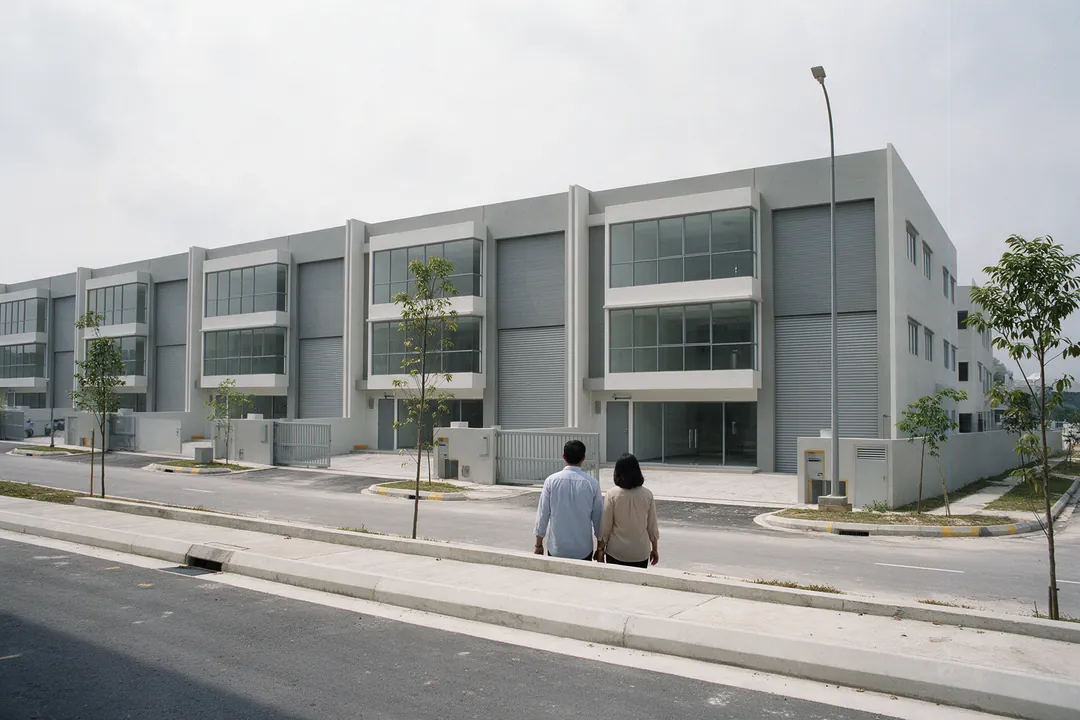 Photo for illustration purposes only
What can you change in a finished factory, and what do you inherit?
In a finished factory, a fit-out budget moves partitions, lighting, services and where the office sits. It does not move the eave height, the column grid, the floor rating or the apron, and those are the terms on which you take the building. Read them before you sign, because they are what a process either fits or does not.
A fit-out can change
- Partitions, where the office sits, how people move
- Lighting, ventilation and compressed-air runs
- Racking and floor marking, once you know the floor rating
- Distribution boards within the supply you already have
You inherit
- Eave height and the clear span between columns
- The floor rating, and where the columns are
- The apron, and whether a container lorry can turn in it
- The title's category and express condition - see light, medium or heavy industry
Power is the one to settle first. On our own current listings in October 2026, the Shah Alam Seksyen 15 units are 300-600A three-phase each and the two Port Klang buildings are 800A. Raising it is a separate exercise - see factory power and TNB upgrades - tenure and the years left are in freehold or leasehold, and what to look at on the day is in what to check during a factory viewing.
What does a build cost beyond the land and the contract?
The two headline prices are not comparable. A finished factory's price already carries its design, its approvals, its construction and the risk whoever built it took. A build's price is land plus a construction contract, with the professional team, the CIDB levy and months of holding cost in between - and its final figure is only settled on the day the building is.
| Where the money goes | Ready-built | Build your own |
|---|---|---|
| Design and approvals | In the price | Yours to pay and manage |
| Construction risk | Carried by whoever built it | Yours |
| Waiting before you can use it | Fit-out only | Approvals plus construction |
The CIDB levyCIDB's project-declaration page puts the levy at 0.125%, imposed on the total value of construction work that exceeds RM500,000. The contractor awarded the work must declare it to CIDB, fill in the levy payment form and clear the levy within 30 days from the date CIDB Form L2/96 is issued. The page carries no effective date, so confirm the current rate with CIDB before you price a build, and settle in the contract who carries it.
The taxes on the transaction itself apply to both routes - see stamp duty, legal fees and RPGT - and banks do not treat a finished factory and a land-plus-construction project the same way, which is in factory loans: margin, tenure and documents.
Which route fits you?
Answer five questions in order: is your date fixed, how unusual is your process, will you grow, who in the company will run a build, and have you seen the finished options? A fixed date and an ordinary process point to a ready-built unit. A process that dictates the building points to land.
- Is the date fixed?A customer order, a lease ending or a licence deadline already sets it - then look for a finished building.
- How unusual is your process?A specific crane height, floor rating or waste route is hard to find in a finished unit.
- Will you grow?If you plan to double output within three years, look at the room on the lot, not just the space you need today.
- Who will run it?A build is a part-time job for months. Is there someone in the company to take it?
- Have you seen the finished options?View a few finished buildings before you commit to building. You will know what you are actually missing.
Reporting on industrial demand in the Johor-Singapore Special Economic Zone, Knight Frank described occupiers' move towards buildings shaped around an operation:
"Logistics players are expanding into semi-automated and tailor-built buildings to meet evolving operations."
Read the full report on edgeprop.my
In the same report, Allan Sim also said older factories are no longer suitable for new tenants. That is the honest risk on the ready-built side: a second-hand building has to be checked against your process before you take it.
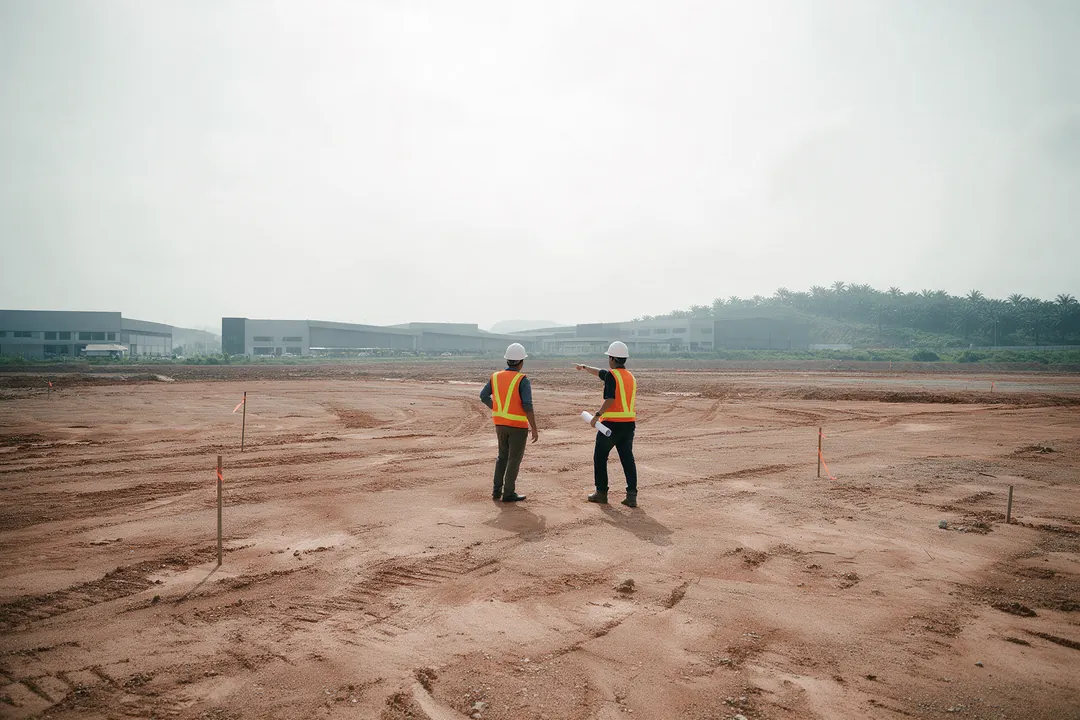 Photo for illustration purposes only
Send Chris the size, power, floor loading, location and date you need, and say whether you want to buy or rent. He looks for finished units and for land together.
Message Chris on WhatsAppNot ready to shortlist? Start with a requirement written to be matched. Leaning towards a finished unit in a managed park? See Eco Business Park V, Puncak Alam, NCT Smart Industrial Park, Kuala Langat and what the maintenance fee pays for.
Sources (4)
- Town and Country Planning Act 1976 (Act 172), which applies in Peninsular Malaysia, sections 19(1) and 19(2)(a), text as at 1 June 2021, in the copy hosted by the Penang State Town and Country Planning Department: Act 172 (PDF)
- Kedah local-authority portal (Kulim Municipal Council one-stop centre), Certificate of Completion and Compliance page - the Principal Submitting Person, Forms G1-G21 stage certification and Form F: pbt.kedah.gov.my
- Construction Industry Development Board Malaysia (CIDB), Project Declaration page - the 0.125% levy, the RM500,000 threshold, contractor declaration and the 30-day Form L2/96 deadline: cidb.gov.my
- EdgeProp.my, 3 February 2026, "18MPS: Industrial demand outpaces supply in JS-SEZ-Knight Frank", quoting Allan Sim, senior executive director of Knight Frank Malaysia: edgeprop.my
Common questions
Can I add a mezzanine or extend a ready-built factory later?
Only if the work stays inside the building. The section 19(2)(a) exemption in the Town and Country Planning Act 1976 covers works that affect only the interior and do not change the use, materially affect the external appearance, increase the height or floor area, or affect drainage, sanitary arrangements or soundness. A mezzanine that adds floor area, or an extension, falls outside it. Check your own case with your architect or the local authority.
Who signs off a factory I build, and on what form?
The Principal Submitting Person - a registered professional architect, engineer or building draughtsman. They certify the work in stages on Forms G1 to G21 and issue Form F, the certificate of completion and compliance. Processing times differ by local authority, so ask yours.
What completion papers should I ask for when I view a ready-built factory?
Ask the owner for a copy of the building's completion paperwork: Form F, the certificate of completion and compliance, or a certificate of fitness for occupation. One of the units listed on this site records a CF obtained. Do not assume a building may lawfully be occupied until you have seen the document.
Is building always cheaper than buying a finished factory?
Not necessarily. The price of a finished building already carries its design, its approvals, its construction and the risk the builder took; a build's final cost is only settled on the day it is finished. Have a registered valuer look at the numbers on either route before you commit.
Can I rent a ready-built factory instead of buying one?
Yes. Every one of the four listings on this site in October 2026 is space to rent. Send us the size, power and move-in date you need, and say whether you want to buy or rent - we will look at both.